


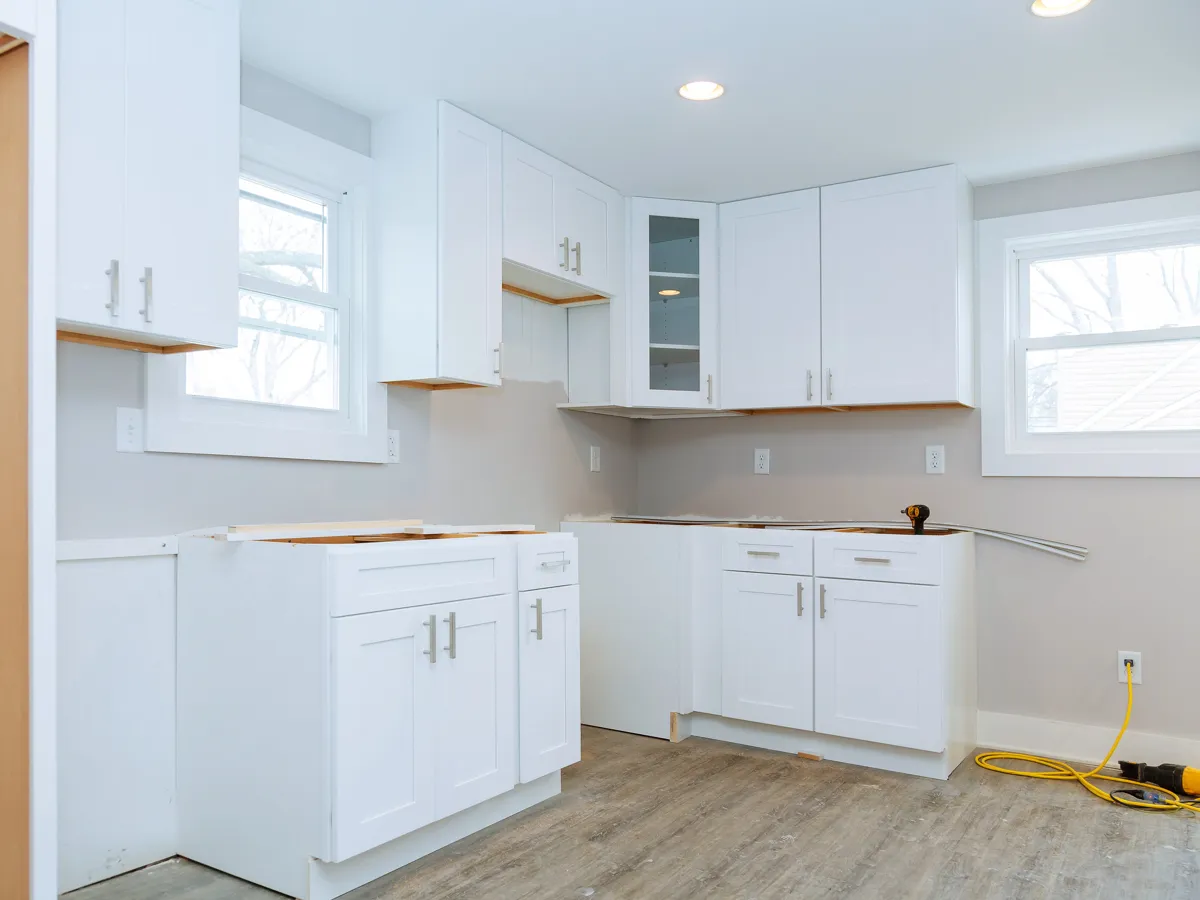
The short answer: yes, on the right wall. Peel-and-stick backsplash works well on a smooth, painted wall that gets splashes but not direct heat, steam or running water. It doesn’t belong inside a shower, on brick or bare drywall, or right behind a stove’s burners, and most brands want a smooth wall rather than a textured one.
The details change by brand, so this guide uses the one maker that publishes full rules, Smart Tiles, as the worked example and tells you where other brands differ. Here’s how to check your wall, the stove rule to read first, and what to do before the first tile goes up.
Where it works and where it doesn’t
Good spots:
- Painted drywall that is smooth and flat. Smart Tiles lists it as an ideal surface (after fresh paint has had time to cure; see the prep steps below).
- The wall between your counter and upper cabinets, away from the stove.
- Over old tile, if the old tile is smooth. Smart Tiles says deep or wide grout lines can show through, so stick up one or two tiles as a test first.
- A bathroom wall that gets splashes, like behind a sink.
Bad spots, according to Smart Tiles’ list of surfaces to avoid:
- Textured walls, like orange-peel or knockdown finishes. Smart Tiles says textured or uneven surfaces don’t let the tiles stick well.
- Unpainted drywall, porous wood, brick and stone.
- Textured wallpaper or textured ceramic tile.
- Inside a shower or tub.
- Floors, countertops, ceilings and outdoors.
Brands differ on texture. Some thicker sheets claim more grip: Art3d’s listing says its sheets grip “smooth, clean surfaces and lightly textured walls”. Tic Tac Tiles’ listing says to sand and prime a textured wall and let it cure for 7 days first. So check what your brand says about your wall before you buy.
Not sure if your wall is textured? Shine a flashlight along it from the side. If you see little shadows from bumps, it’s textured.
Can it go behind the stove?
Sometimes, but not right behind the burners. This is the most important rule, and it changes by brand.
Smart Tiles is the clearest example. The company says its tiles are heat resistant and can go behind a stove or cooktop. But if your stove has no rear control panel or metal plate, gas or electric, leave an 8-inch tile-free zone behind the cooktop. Check the drawing in your tile’s instructions for exactly where that zone goes. Keep tiles 2 inches away from countertop heat makers like toasters and toaster ovens. Its warranty also says the tiles shouldn’t get hotter than 120°F or be exposed to steam or open flame.
Other brands give different numbers, and some don’t give one at all. So:
- Read the instructions for the exact tile you buy. Use that brand’s distance, not one from another brand.
- If the box gives no distance from the stove, don’t put it behind the stove. That’s our rule of thumb. Cover that area with real tile or a metal panel made for that spot instead, and run the peel-and-stick tile around it.
- On a gas stove, consider a panel. For gas cooktops, Smart Tiles suggests its own metal Smart Panel to keep steam and open flame off the tiles.
Heat resistant is not the same as fireproof. A grease flare-up should never reach the tiles.
Prep the wall first
Every maker’s instructions start with the wall. Smart Tiles’ prep steps make a good checklist:
- Clean off the grease. Kitchen walls have a film you can’t see. Use a degreaser such as TSP or a baking soda mix. Skip dish soap: Smart Tiles says it can leave a greasy film behind.
- Fill holes and gaps with plaster or spackle so the wall is flat.
- Prime or paint if the wall needs it. After primer, wait 72 hours. After fresh paint, wait 21 days. In our view, rushing this step is the easiest way to undo the whole job.
- Let the wall dry completely. Never tile over a damp wall.
Smart Tiles’ warranty also requires installing in a room between 65°F and 95°F, with the tiles at room temperature too, so a cold-garage install can void it. Then press each tile down firmly, especially the edges. The Smart Tiles Amazon listing says the tiles are fully stuck “generally after 48 hours”.
Will it come off without damage? (Renters, read this)
Usually, but no maker promises it. Smart Tiles says its tiles come off “practically without damage, depending on the surface”. To remove one, warm it with a hair dryer, peel slowly from a corner, and clean off any leftover glue.
“Depending on the surface” is the catch. In our view, the risk is highest on paint that wasn’t primed or wasn’t cured. If you rent:
- Ask your landlord first, and get the yes in writing.
- Test one tile in a hidden spot, like under the upper cabinets. Leave it a week, then take it off with a hair dryer and see what the paint looks like.
- Keep a little paint touch-up on hand for when you move out.
How long does it last, and does it look real?
Makers are confident about lifespan. Smart Tiles says its tiles are “designed to last as long as you want”, and that their gel top layer protects against yellowing and cracking. That comes with a condition: the warranty only covers tiles put up on a prepared wall, away from steam, flame and heat over 120°F.
Does it look like real tile? We haven’t put these up ourselves, so here’s our judgment from how they’re made. Tiles with a raised, glossy face should catch light more like glazed tile than flat printed sheets do. A believable grout color helps too. Our guide to grout colors for white subway tile shows what each one does to the look.
One more care note from Smart Tiles: strong spices like turmeric can stain the tiles for good. Wipe splashes quickly with a soft sponge and warm water, and skip scrubbing pads.
So, should you do it?
- Yes, if you rent, want a new look this weekend, and your wall suits the tile you pick. It’s the fastest backsplash change there is.
- Yes, with a tile-free zone or a panel behind the stove, if your stove has no back panel or metal plate (gas or electric), or the tile’s instructions call for one.
- No, if the area gets wet, sits right behind the burners, or you want something that will last as long as the house. Then real tile is worth the extra work. Our subway tile backsplash ideas can help you pick a look.
Ready to buy? See our picks for the best peel-and-stick backsplash tile, each with what its maker says about heat and walls. And before you order, work out how much tile you need, with a little extra for cuts.
Common questions
My stove has a back panel. Do I still need a gap?
Smart Tiles asks for the 8-inch tile-free zone only when there’s no back panel or metal plate. Even with a panel, its warranty still applies. The tiles must not get hotter than 120°F or touch open flame or steam. They must also stay 2 inches from heat sources like a toaster oven. Other brands may differ, so check your tile’s instructions.
Will steam lift the tiles?
It can void the warranty. Smart Tiles’ warranty excludes tiles directly exposed to steam, and the company suggests its Smart Panel behind gas cooktops partly to keep steam off. So don’t park a kettle, rice cooker or coffee maker where it puffs steam straight onto the wall. Those are our examples; the rule is the maker’s.
How do I cut around outlets?
Smart Tiles says to measure, cut with a retractable utility knife, and fit the tile snugly. It also says the printed letters and numbers on its tiles shouldn’t be cut or left visible: they overlap along the grout lines. The rest is our general safety advice, not the maker’s. Turn the power off at the breaker before you take the cover plate off. Then put the plate back on top of the tile. You may need longer screws to reach through the tile.
Sources
- Smart Tiles: FAQ (surfaces, prep, removal, care, cutting)
- Smart Tiles: Can I install Smart Tiles behind a stove or gas cooktop?
- Smart Tiles: On what surfaces should I not install Smart Tiles?
- Smart Tiles: How to prepare my surface for installation
- Smart Tiles: Warranty (heat, steam, room-temperature and paint-cure conditions)
- Smart Tiles Subway Pure White, Amazon listing (fully adhered after about 48 hours)
- Art3d Subway Tiles 10-pack, Amazon listing (lightly textured walls)
- Tic Tac Tiles Subway White, Amazon listing (textured walls: sand, prime, 7 days)